Neuron Synapse and Neurotransmitter Release
See how synaptic vesicles release chemical signals across a narrow cleft and activate receptors on the next cell.
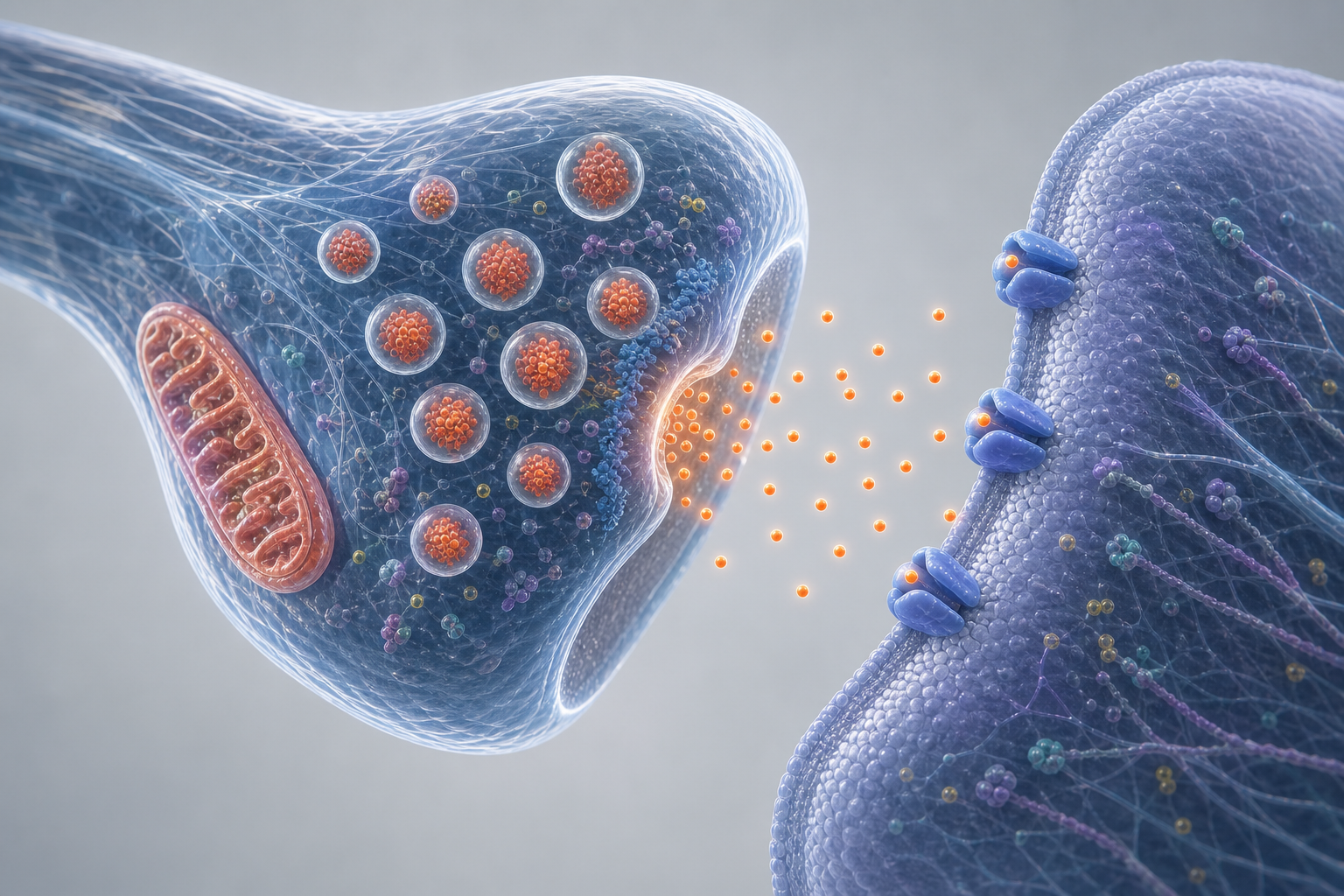
Presynaptic axon terminal
The sending end of the neuron where electrical activity triggers chemical release.
Synapses convert an electrical signal into a chemical one. When an action potential reaches the axon terminal, vesicles move toward the presynaptic membrane and release neurotransmitters into the synaptic cleft.
The molecules diffuse only a short distance before binding receptors on the postsynaptic membrane. That binding can open ion channels, change the receiving cell's membrane potential, and continue or modulate the signal.
Key Idea
The synapse is loosely coupled by design: the sending cell releases molecules, and the receiving cell interprets them through receptors. This lets nervous systems tune signal strength, timing, and inhibition.