BiologyGenetics11 minIntermediate
DNA Replication Fork
Follow the enzymes and strand geometry that let DNA copy both strands from a moving fork.
1
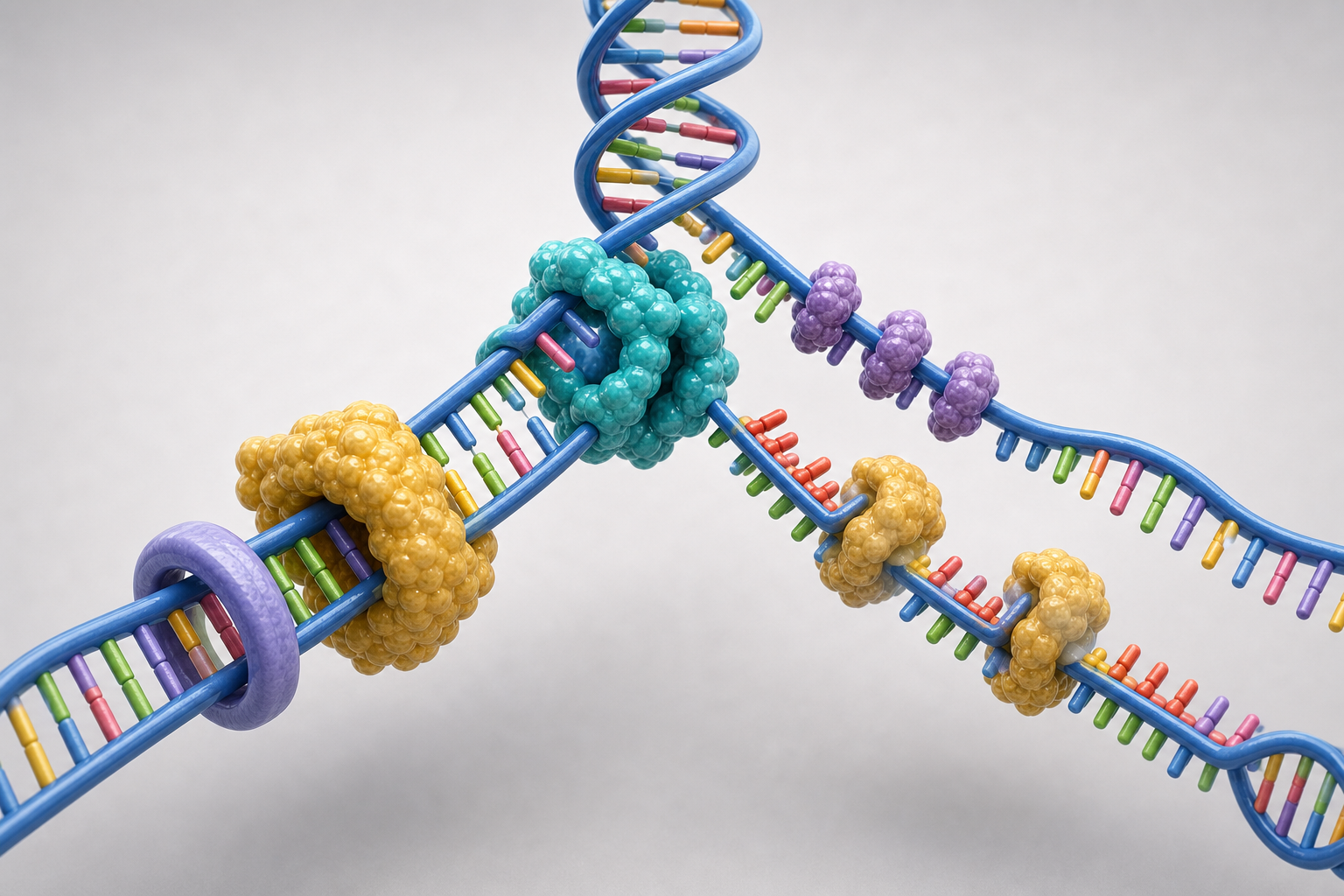
Replication fork
The Y-shaped region where DNA strands separate and copying begins.
DNA replication copies both strands, but DNA polymerase can only extend in one chemical direction. That creates a continuous leading strand and a segmented lagging strand.
Helicase opens the fork, binding proteins stabilize single strands, polymerases copy DNA, and primers provide starting points for new synthesis.
Key Idea
The replication fork is a coordinated machine. Its geometry explains why the two new strands are built differently.